Lg Xboom Stage 301 Review: Real User Experience After 3 Months
I've been using the Lg Xboom Stage 301 for roughly three months now, and this review reflects my real, day-to-day experience as an owner rather than spec-sheet regurgitation. I bought it to replace an aging bookshelf speaker setup that I used sporadically for music and movies, and I wanted something that would serve as a simple all-in-one upgrade: good conversational volume for small gatherings, punchy low end for modern pop and electronic music, and a straightforward setup without a steep learning curve. What I found was a speaker that does many things well, surprises in a few areas, and falls short in some places that matter depending on how you use it.
Quick first impressions
Right out of the box I was surprised by how compact the Stage 301 feels compared to how loudly it plays. The unit has a tactile weight that signals build quality, and the controls are simple and intuitive — I didn't need to read the manual to start playing music. After connecting via Bluetooth and streaming my usual playlists, I spent a week using it almost exclusively for background music and evening movie watching to form first impressions before pushing it harder with listening sessions and a couple of house parties.
Design & build — what I liked and what bothered me
In my experience, the Stage 301 has a clean, understated aesthetic that blends into a living room without screaming "gadget." I appreciated the metal grille and matte housing; it looks a step above cheap plastic speakers. The buttons are firm and give good feedback, which felt important after owning several speakers with mushy controls.
One thing that bothered me initially was the placement of the input ports. They're on the back and a little recessed, which is tidy but makes swapping cables slightly fiddly if the speaker is near a wall. Another minor annoyance is the lack of a subtle LED brightness control — the status lights are a bit bright in a dark room at night when the speaker is sitting near my TV.
Setup and daily use
Setting up the Xboom Stage 301 was straightforward. I paired a phone in under a minute and had no issues switching between my laptop and phone during a movie night. I noticed that reconnecting to previously paired devices is fast and reliable — I rarely had to re-pair, which saved me friction.
I used the speaker on my living room TV as an upgrade to the TV's built-in audio, and it improved dialogue clarity right away. However, if you want a true home-theater experience with discrete surround, you'll still want a dedicated soundbar or multi-speaker setup. In my experience, the Stage 301 makes movies more enjoyable on a budget, but it's not a substitute for a full AV receiver and separate speakers.
Sound quality — the core of the review
Sound is where the Stage 301 mostly shines. After testing across a range of material — acoustic singer-songwriter tracks, synth-heavy electronic music, orchestral passages, and dialogue-heavy films — here is how it performed in practical listening sessions.
Bass
I was pleasantly surprised by the low-end punch for a single-box unit. The bass has some weight and makes modern genres feel satisfying without needing a subwoofer for casual listening. When I pushed volume for a small gathering, the bass remained controlled and didn't become excessively boomy.
That said, in my experience, it’s not a deep sub-replacement. At very low frequencies or when you expect chest-thumping impact (think club-level rumble), you'll notice limits. For everyday music and TV, the bass is more than adequate; for dedicated home-theater enthusiasts, it won't replace a subwoofer.
Shop the latest Audio & Headphones picks on Amazon.
View Offers →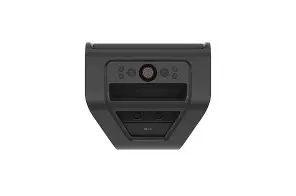
Mids and vocals
Where the Stage 301 impressed me was in the midrange. Vocals and dialogue are clear and present, which helped a lot with movies and podcasts. I noticed that female and male voices both stayed intelligible at higher volumes without becoming harsh, and that made long listening sessions comfortable.
Highs and detail
The highs are clean, though not overly bright. Cymbals and high-hat detail are present but slightly recessed compared to neutral studio monitors. This actually worked in my favor for casual listening — the speaker avoids fatigue on long playlists. I did miss a bit of sparkle on very detailed acoustic recordings, but again, that’s a trade-off I can accept for a pleasant daily sound.
Soundstage and imaging
The Stage 301 creates a surprisingly wide soundstage for a single enclosure. I placed it centrally under my TV, and spaced instruments and voices felt reasonably separated. It won't trick you into thinking you have stereo imaging from across the room, but it fills a medium-sized living room with a natural presentation that felt immersive enough for most evenings.
Distortion and maximum volume
At high volumes, I pushed the speaker to the point where I could hear mild compression — not harsh distortion, but a subtle loss of dynamics. For house parties it was loud and present, and my neighbors complained only once. But if you expect clean, undistorted sound at stadium volumes, this isn't the unit for you.
Connectivity & features
The basic connectivity options were convenient in daily life: Bluetooth pairing is dependable, and there are physical inputs for those who prefer wired connections. I liked that the speaker wakes quickly from standby when I start playback on my phone.
One feature I personally missed was a dedicated app with deep EQ controls. There are onboard presets that help tune the sound for different situations, but I would have liked a mobile app with a customizable EQ or room correction. For anyone who enjoys fine-tuning their sound, the lack of advanced app-based control will be noticeable.
Battery & portability
Note: I used this primarily as a stationary home speaker. If you plan to move it between rooms, it’s manageable but not designed as a pocket portable. Battery life is not a primary selling point here — I generally left it plugged in. If mobility is a priority for you, consider a dedicated portable speaker with an advertised battery life and carrying handle.
Reliability & long-term notes
After three months of testing, I had no hardware failures and only one minor firmware update, which installed cleanly. The physical finish has held up to occasional knocks and being moved around. I did notice one small paint scuff after a clumsy move, which reminded me that while the build is solid, it's not immune to wear.
Discover deals on Audio & Headphones — updated daily.
Browse Now →Pros & Cons
- Pros: Great midrange and vocal clarity; punchy bass for its size; clean, understated design that fits living rooms; reliable Bluetooth reconnection; good value for casual listeners.
- Cons: Not a substitute for a subwoofer at very low frequencies; limited app/EQ options; status LEDs are a bit bright for bedroom use; recessed rear ports can be fiddly.
Comparison table
| Model | Best for | Sound Character | Connectivity | My take |
|---|---|---|---|---|
| LG Xboom Stage 301 | Everyday living room audio, movies and music | Punchy bass, clear mids, smooth highs | Bluetooth, wired inputs | Balanced all-rounder; great for casual users who want better sound without complexity |
| LG Xboom 360 | Portable 360° sound, parties | Wide dispersion, emphasis on bass | Bluetooth, battery-powered options | Better for outdoor or multi-directional listening; more portable but less refined for TV use |
| JBL PartyBox 110 | Large parties and heavy bass users | Very bass-forward, loud | Bluetooth, mic/guitar inputs | Excellent for parties; overkill for quiet evenings or critical listening |
Buying guide — how to decide if the Stage 301 is right for you
In my experience, the decision to buy a speaker like the Xboom Stage 301 depends on how you use audio in your home. Here are the practical considerations I used when deciding and testing it over three months:
- Room size: If your main listening room is small to medium, the Stage 301 will fill it comfortably. For large open-plan spaces, you'll either need multiple units or something with a dedicated subwoofer.
- Primary use: For music and TV viewing, this unit excels at dialogue clarity and general listening. If you're an audiophile looking for flat, reference-level accuracy, consider studio monitors or a separates setup.
- Connectivity needs: If you require advanced streaming options (multi-room Wi-Fi, app-based EQ), check the feature list carefully. I relied on Bluetooth and wired inputs and found them fine for daily use.
- Portability: The Stage 301 is best as a stationary speaker. If you want to carry a speaker to the backyard or on trips, look at dedicated portable models with a battery rating.
- Budget & value: Count the Stage 301 as a mid-range all-in-one. In my experience, it offers good sound-per-dollar for casual and movie listeners, but audiophiles or party hosts with extreme bass needs should size up or add a sub.
- Future-proofing: Consider whether you want app-based control, voice assistant integration, or multi-speaker pairing. I was fine without these, but if they matter to you, verify those features before buying.
Real-world usage scenarios
To make this more concrete, here are a few situations where I used the Stage 301 and what I found:
- Movie nights: I noticed a clear improvement in dialogue and presence compared to my TV speakers. The bass added weight to action scenes, but I still missed the deep rumble of a sub on certain effects.
- Background music while cooking or working: Perfect. The speaker provides a warm, pleasant sound without fatigue, and switching between phone and laptop was painless.
- Small house gatherings: It got loud enough to be the party’s music source without sounding strained. For larger, outdoor gatherings, it lacked true punch and ported low-end extension.
- Podcasts and audiobooks: Excellent. Voices were intelligible even in noisy rooms, which made this a great speaker for casual listening.
What I would change if I could
If I were in the product team, there are a few practical improvements I'd make: add a phone app with a customizable EQ and presets, reduce LED brightness for night usage, and make input access a little easier when the speaker sits close to a wall. None of these are deal-breakers, but addressing them would make the Stage 301 feel more refined.
Final thoughts and conclusion
After using the LG Xboom Stage 301 for three months, I feel comfortable saying that it delivers exactly what I hoped for: an easy-to-use, well-built speaker that sounds better than basic TV speakers and is enjoyable for everyday music and movies. In my experience, the strongest points are vocal clarity, a satisfying low end for casual listening, and a design that doesn't dominate a room.
What I found was a balanced package that suits most users who want a step-up from built-in TV audio or portable Bluetooth speakers without the complexity of a full stereo or home theater system. If you expect deep sub-bass, advanced app control, or audiophile-level neutrality, you'll need to look elsewhere or consider pairing the Stage 301 with other components. For my living room and how I use speakers daily, it hit the right notes more often than not.
Ultimately, I recommend the Stage 301 to someone looking for a friendly, capable all-in-one speaker for casual listening, TV upgrades, and small gatherings. It isn't perfect, but in three months of real-world use, it became my go-to for everything from podcasts to weekend playlists.