I Switched to the Pixma Ts8320 and Here is What Happened
Introduction
The decision to replace a multipurpose inkjet can feel small and consequential at the same time: printers are appliances that hide their limitations until a busy afternoon of printing, scanning and photo editing exposes them. After a migration to the Canon Pixma TS8320 — a mid-range, photo-focused all-in-one inkjet — the experience can be summarized as an incremental upgrade that addresses common home and small‑office needs without radically altering workflows. This article explains what the Pixma TS8320 delivers in everyday use, where it falls short, and which buyers will benefit most from the switch.
Overview: Who the Pixma TS8320 Is For
The Pixma TS8320 is pitched at users who balance document work with occasional or regular photo printing: hobbyist photographers, families that print keepsakes, small home office setups, and craft enthusiasts who need accurate colors on specialty paper. It is not aimed at heavy-duty office environments that demand very high monthly volumes, nor at professional print shops that need color calibration options and large media handling.
Detailed Product Review and Analysis
Design and Build
The TS8320 has a compact footprint designed to fit on a home desk or a bookshelf. The chassis uses glossy and matte plastics, with a slightly curved profile and a touchscreen control panel that folds into the top. The paper output and rear feeding are arranged to minimize the printer’s footprint while accommodating photo paper and envelopes.
Setup and Software
Setup is straightforward: network setup over Wi‑Fi or wired connection (where available) and mobile printing support through Canon’s print app, alongside standards like AirPrint and Mopria for many devices. The software bundle includes basic scanning and photo-printing utilities. For buyers who value a quick out‑of‑the‑box experience, the guided setup and mobile printing options reduce friction, though advanced users may find the desktop utilities limited compared with dedicated photo-editing workflows.
Print Quality: Documents and Photos
Where the TS8320 shines is in photo output. The machine uses a multi‑ink system that blends colors smoothly for pleasing prints on glossy and matte photo media. Skin tones and subtle gradients reproduce well for casual photography and family albums. For text documents, print quality is crisp and entirely acceptable for letters, reports and schoolwork. Documents that require razor-sharp small type (legal contracts, microprint) will still benefit from a laser printer, but for most everyday tasks the TS8320 is more than adequate.
Speed and Performance
This is a consumer-grade inkjet, so speed is balanced against quality. The TS8320 performs well for single, occasional prints and moderate batches. High-quality photo mode is slower (as expected), while draft or standard modes are quicker and suitable for routine documents. The warm-up and first-page-out times are reasonable, and the printer handles intermittent use without needing frequent maintenance beyond standard nozzle checks.
Ink System and Running Costs
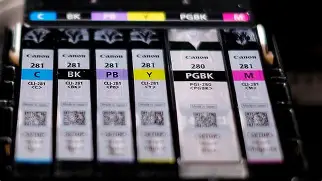
The TS8320 uses individual ink cartridges, which is helpful because users replace only the color that runs out. This modular approach reduces waste and often lowers the cost compared to multi-color combined cartridges. However, as with most dye-based color systems, color printing can become expensive when used frequently. Buyers who prioritize low cost per page should compare cartridge page yields and consider enrollment in printer manufacturer programs where appropriate. In real‑world use, moderate photo printing and document duties typically result in a balanced cost profile, but heavy photo users will notice the cumulative cost over time.
Find top-rated Electronics products at great prices.
Shop Amazon →Connectivity and Mobile Printing
Wireless printing is a major convenience point. The TS8320 supports printing from phones and tablets through Canon’s app and common standards like AirPrint. For users who print from multiple devices or rely on cloud workflows, this simplifies sharing a single home printer. USB and card‑slot options provide direct access for photographers who prefer to print from an SD card or a camera connected via USB.
Scanning and Copying
The scanning unit is adequate for document archiving, homework scanning, and occasional creative work. Scans reproduce color and contrast accurately enough for digital archiving and OCR use. The flatbed design is fine for single-page books and thicker media, but it lacks a dedicated automatic document feeder (ADF), which is an important limitation for buyers who scan multi‑page documents regularly.
Real‑World Use Cases
- Family Photos: Parents printing holiday photos and enlarged family portraits will appreciate the color depth and borderless printing options.
- Small Office Tasks: The TS8320 handles invoices, proposals, flyers and light marketing materials with acceptable text quality and decent color reproduction.
- Students and Home Educators: Quick prints for assignments, visual aids and color-rich projects are convenient, and the compact size fits dorm rooms and small home study areas.
- Crafters and Card Makers: Craft hobbyists printing on specialty paper (matte, fine art, cardstock) will find the print surface options and color fidelity useful.
Pros & Cons
- Pros:
- Excellent photo print quality for a consumer inkjet, with smooth color gradations and pleasing skin tones.
- Individual ink cartridges reduce waste and let users replace only the colors they need.
- Compact footprint with a simple, intuitive touchscreen interface.
- Solid mobile and wireless printing support for phones, tablets and laptops.
- Borderless photo printing options and support for a variety of paper types and sizes.
- Cons:
- Running costs can be high for frequent color/photo printing; ink is the primary ongoing expense.
- No automatic document feeder (ADF), which limits productivity for multi‑page scanning or copying.
- Not designed for very high monthly duty cycles — large offices or heavy print environments may need a different class of device.
- Advanced color calibration and paper profiling are limited compared with prosumer photo printers.
How the Pixma TS8320 Compares to Alternatives
For readers weighing options, a compact comparison highlights differences without delving into exhaustive spec lists. The table below compares the Pixma TS8320 with two commonly considered alternatives in the same general category: an Epson photo-centric all-in-one and an HP consumer photo inkjet. The goal is to present high-level differences that matter to buyers.
| Model | Print Focus | Ink System | Duplex | Display | Best for |
|---|---|---|---|---|---|
| Canon Pixma TS8320 | Balanced documents and photo printing | Individual color cartridges (multi‑ink) | Automatic duplex for documents | Color touchscreen | Home photo printing, family albums, small office |
| Epson Expression Photo (example competitor) | Photo-first printing with high color depth | Multiple dye/pigment inks (often 6+) for richer gamut | Some models support duplex; varies | Touchscreen or small LCD | Photography enthusiasts who prioritize color gamut |
| HP Envy/Photo series (example competitor) | Convenience and photo printing for families | Two-cartridge or individual inks depending on model | Automatic duplex on some models | Touchscreen on higher-end models | Casual photo printing and mixed home use |
Buying Guide: What to Consider Before Switching
Moving to a new printer can feel like a small appliance purchase, but the right choice depends on several practical factors. The following buying guide distills key considerations into actionable checkpoints.
1. Primary Use Case
Decide whether photo quality, document throughput, or convenience matters most. The TS8320 is a strong match for users prioritizing photo quality alongside daily document needs. For heavy document volumes, a laser printer is more economical; for pro‑level color fidelity, a dedicated prosumer photo printer is better.
2. Running Costs and Ink Management
Check cartridge prices and availability. Individual cartridges are a plus because they limit waste, but color ink can still be costly if photos are printed regularly. Consider the cost per page for black and color printing using manufacturer figures, and factor in optional subscription or ink-replacement programs if available.
3. Paper Handling
Measure the types and sizes of media to be used. If printing on heavy cardstock, fine-art paper, or using envelopes frequently, ensure the printer supports those media. The TS8320 supports borderless photo printing and a range of sizes useful for hobbyists and families.
Shop the latest Electronics picks on Amazon.
View Offers →4. Connectivity and Workflow
Confirm the printer connects easily to smartphones, tablets and computers. Compatibility with AirPrint, Mopria, and the manufacturer's mobile apps simplifies printing from multiple devices. Also consider whether the printer will be shared on a network or used by a single workstation.
5. Scanning Needs
Evaluate whether scanning speed and automation matter. The absence of an ADF on the TS8320 makes it unsuitable for frequent multi‑page scanning. If the typical workflow involves digitizing stacks of documents, choose a model with an ADF or pair the TS8320 with an inexpensive document scanner.
6. Size and Placement
Measure the intended location. The TS8320’s compact design helps it fit smaller spaces, but account for paper trays and access for cartridge changes. Also factor in ventilation and power outlet placement if it is to sit in a shared living area.
7. Test Prints and Return Policies
When possible, test print samples with the specific printer and paper combination. Many retailers and local print shops will allow sample pages, or manufacturer's display models often produce sample prints to evaluate color and texture. Also review return and warranty policies so that users can swap or return the unit if it doesn't meet expectations.
8. Long-Term Reliability and Support
Check warranty terms and the availability of customer support in the user’s region. Printer longevity often depends on intermittent maintenance — such as nozzle cleanings — and prompt access to replacement cartridges and firmware updates helps extend useful life.
Practical Tips for New Owners
- Use the right paper setting: Match the printer’s paper profile to the media. That small step dramatically improves color and reduces head-strikes on thicker stock.
- Store cartridges properly: For occasional users, avoid leaving partially used cartridges idle for too long — periodic use prevents drying and clogging.
- Keep firmware up to date: Firmware updates can improve connectivity and stability; check Canon's support periodically.
- Consider a color-management workflow: For more accurate photo prints, use color-managed files and soft proofing in photo-editing software before printing.
- Maintain the print heads: Use the built-in nozzle check and cleaning tools if color bands or streaks appear.
Conclusion
Switching to the Pixma TS8320 delivers a balanced upgrade for people who want improved photo capabilities without sacrificing document convenience. Its strengths are clear: strong photo output for a consumer inkjet, flexible media handling for home projects, and user-friendly connectivity. The main trade-offs are running costs for frequent color printing and the lack of an automatic document feeder for multi‑page scanning. For families, hobbyists, and small home offices that print photos and documents in moderate quantities, the TS8320 is a sensible, capable choice that simplifies everyday printing tasks while producing satisfying photo results.